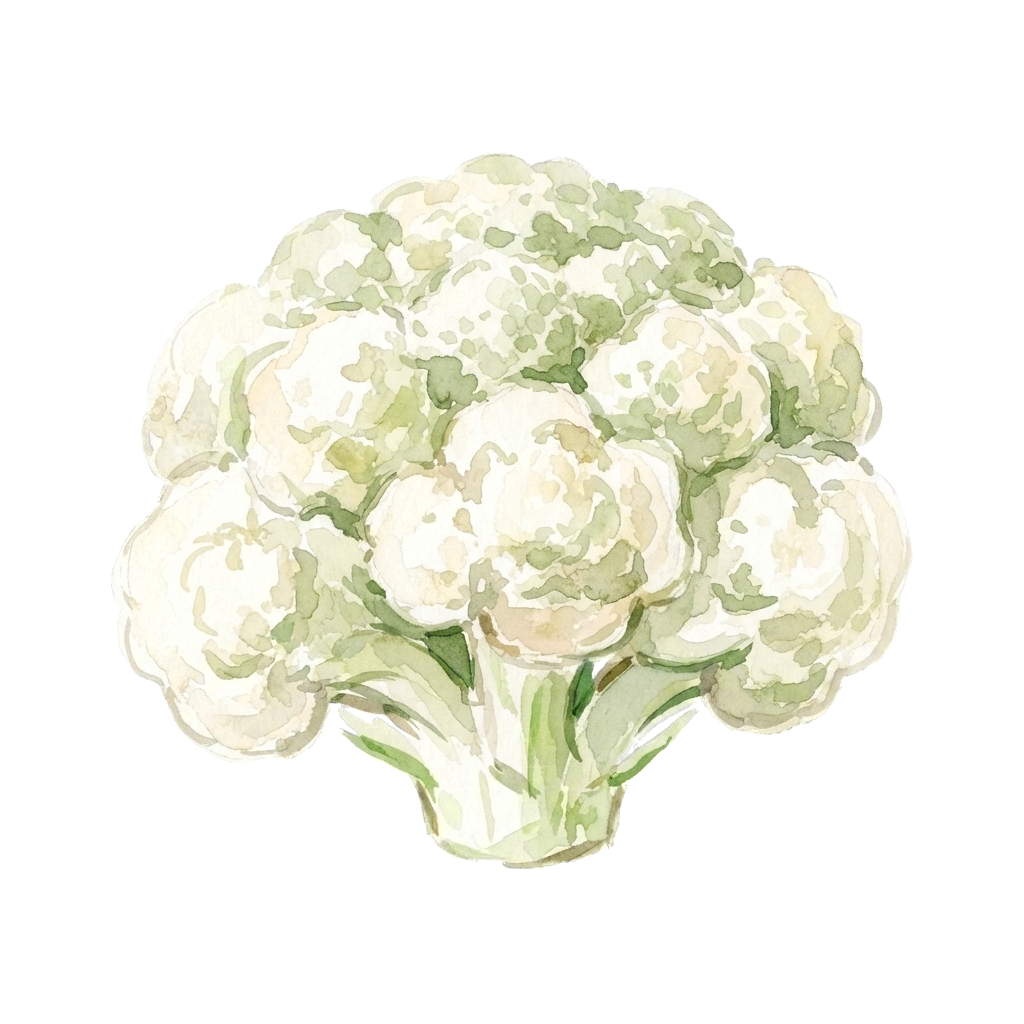
Vegetable · Brassica
Cauliflower
Brassica oleracea var. botrytisThe fussiest of the brassicas, forming a single tight white curd that punishes any stress with small, "buttoned" heads. Steady cool growth and even moisture are non-negotiable. The one rule: keep it growing without a single check from seed to harvest.
Sow depth
N/A — transplant seedlings
Spacing
18 in apart · rows 24 in
Sun
Full sun
Germination
N/A
Time to harvest
55–80 days
Difficulty
Challenging
When to sow cauliflower
- Sow from about 2 weeks before your last expected frost until around your last expected frost.
- Sow from about 14 weeks before the first expected autumn frost until about 12 weeks before the first expected autumn frost.
Transplant seedlings gently — any root disturbance can trigger premature heading.Choose rich, moisture-retentive soil before setting plants out.Water in thoroughly and keep growth steady from day one.
Tie outer leaves loosely over the curd once it is visible, to keep it white.Water and feed consistently — any check produces small, ricey heads.Mulch well to buffer soil temperature and retain moisture.
Cut while curds are tight, dense, and still fully covered by leaves.Harvest promptly once ready — curds coarsen and discolor within days.Trim a few wrapping leaves to keep in the head for protection until use.
Companion plants
Beans fix nitrogen that heavy-feeding cauliflower relies on for a good-sized curd.
Watch out for
Buttoning — Small premature heads caused by cold shock or a check in growth at transplanting. Harden off gradually and avoid checks in growth.Cabbage caterpillars — Chew leaves and can bore into curds in summer. Cover with insect mesh from planting.