Herb · Annual herb
Dill
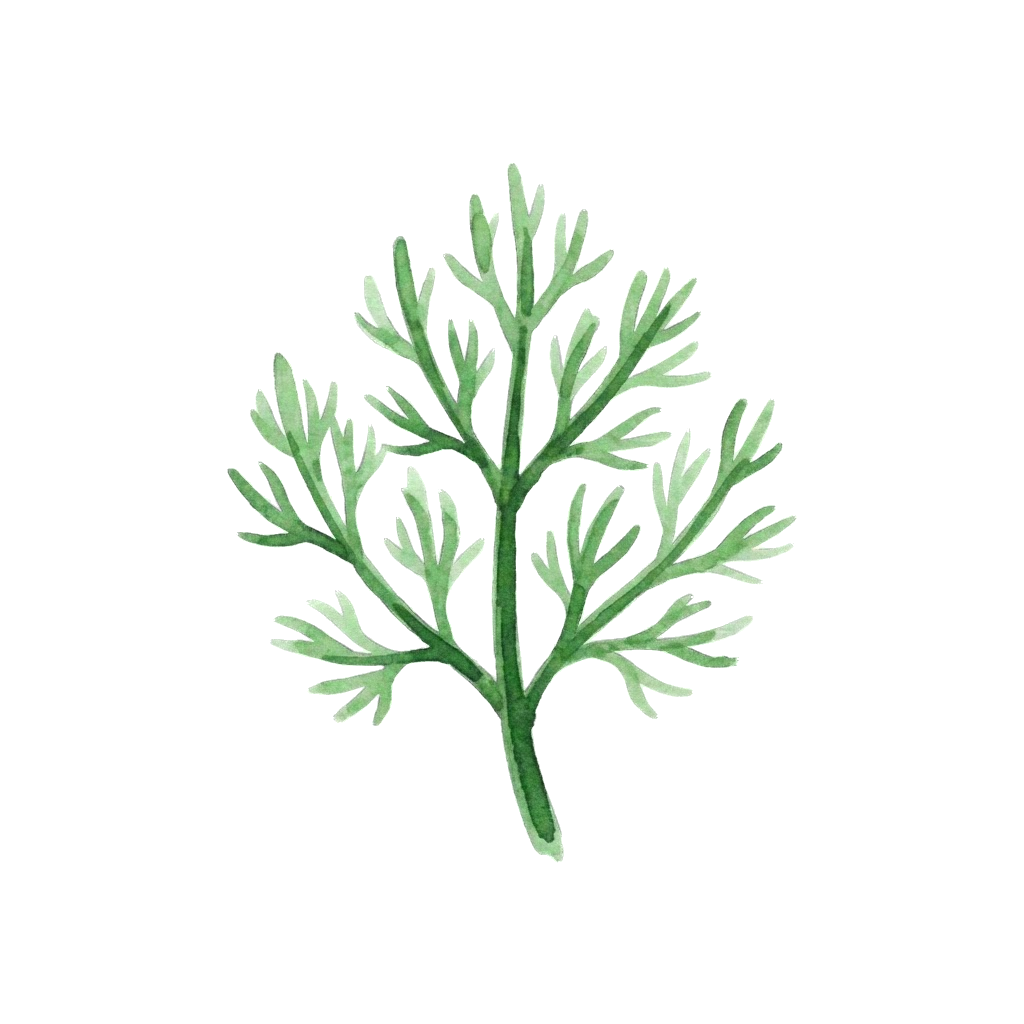
Anethum graveolensFeathery, aniseed-scented dill grows fast and self-seeds readily once it settles in. It runs through its whole life cycle quickly, so successive small sowings keep leaves coming. The one rule: sow direct, since the taproot resents disturbance.
Sow depth
½ in
Spacing
8 in · rows 12 in
Sun
Full sun
Germination
10–14 days
Time to harvest
40–60 days
Difficulty
Easy
When to sow dill
- Sow from about 2 weeks before your last expected frost until about 6 weeks after your last expected frost.
- Sow from about 9 weeks before the first expected autumn frost until about 4 weeks before the first expected autumn frost.
Direct sow only — the taproot forks badly if transplanted later.Scatter seed thinly along a shallow drill and cover lightly with soil.Keep the seedbed evenly moist; germination stalls fast if it dries.
Stagger sowings — repeat every few weeks for a continuous leaf supply.Thin seedlings so plants stand clear of each other for airflow.Stake tall plants in exposed spots; the hollow stems snap in wind.
Snip leaves young — flavor fades once flower heads form.Pick feathery fronds in the morning, before oils volatilize in heat.Let a few heads set seed for both cooking and next season’s sowing.
Companion plants
Dill draws in hoverflies and parasitic wasps that keep aphids off nearby brassicas.
Watch out for
Bolting — Sustained heat pushes plants to flower early and leaves turn bitter. Sow little and often, and harvest before flower buds appear.