Vegetable · Fruiting vegetable
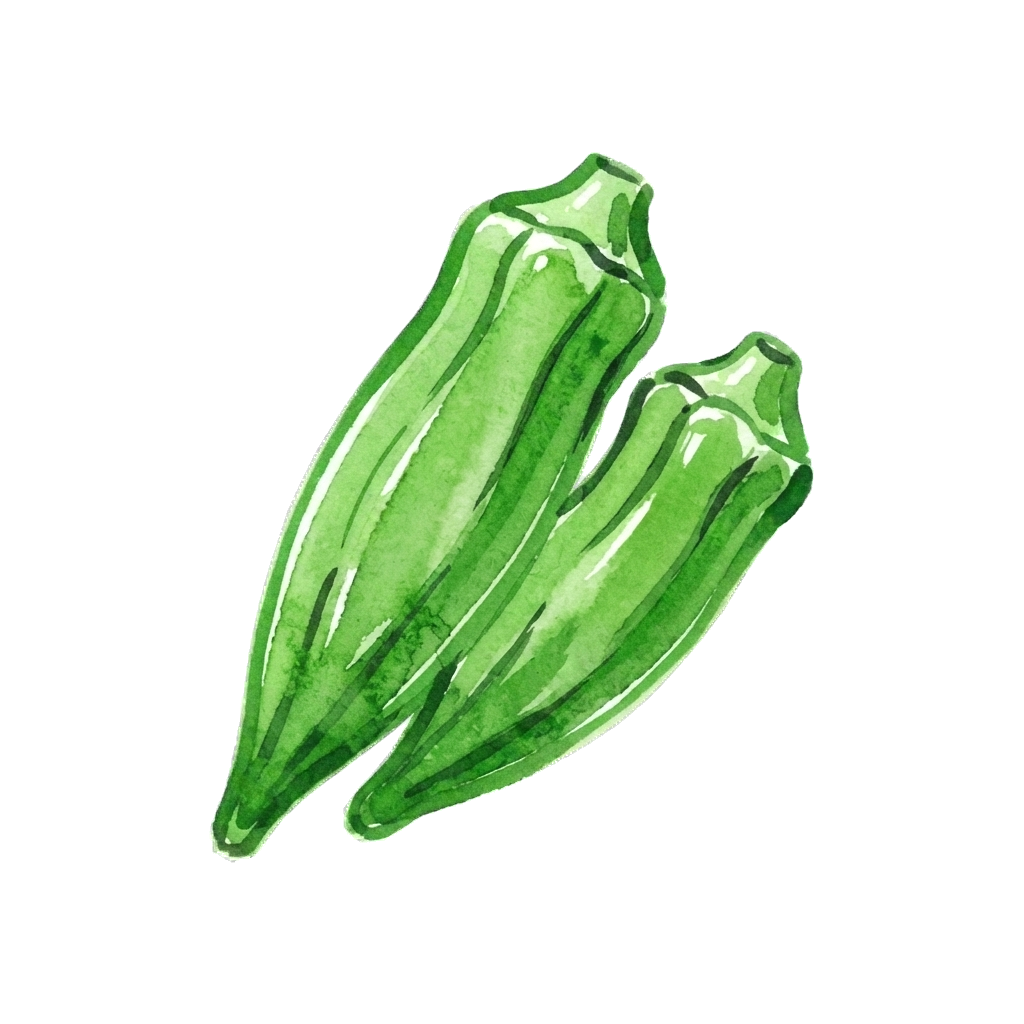
Okra
Abelmoschus esculentusA tall, hibiscus-flowered plant from the tropics that needs real heat to thrive but rewards it with a steady flush of ridged pods. Left too long, pods turn tough and fibrous fast. The one rule: pick every day or two once production starts, since pods pass their prime quickly.
Sow depth
¾ in
Spacing
16 in · rows 24 in
Sun
Full sun
Germination
7–14 days
Time to harvest
55–65 days
Difficulty
Moderate
When to sow okra
- Sow from about 2 weeks after your last expected frost until about 10 weeks before the first expected autumn frost.
Direct sow after soil warms — cold soil rots seed before it sprouts.Soak seed overnight to soften the hard coat and speed germination.Sow a little deeper than most seeds, into thoroughly warmed ground.
Feed lightly — too much nitrogen grows leaves at the expense of pods.Water deeply during dry spells to keep pods forming steadily.Stake tall varieties in exposed spots to prevent wind damage.
Cut pods young — harvest at 2–4 in long for the most tender texture.Wear gloves; okra spines can irritate skin during picking.Check plants every day or two; pods pass ideal size within hours.
Companion plants
Okra's tall form gives light shade that helps sprawling melons and peppers cope with intense sun.
Watch out for
Aphids — Cluster on tender shoot tips and undersides of leaves in warm weather. Blast off with a strong hose spray or introduce ladybirds.