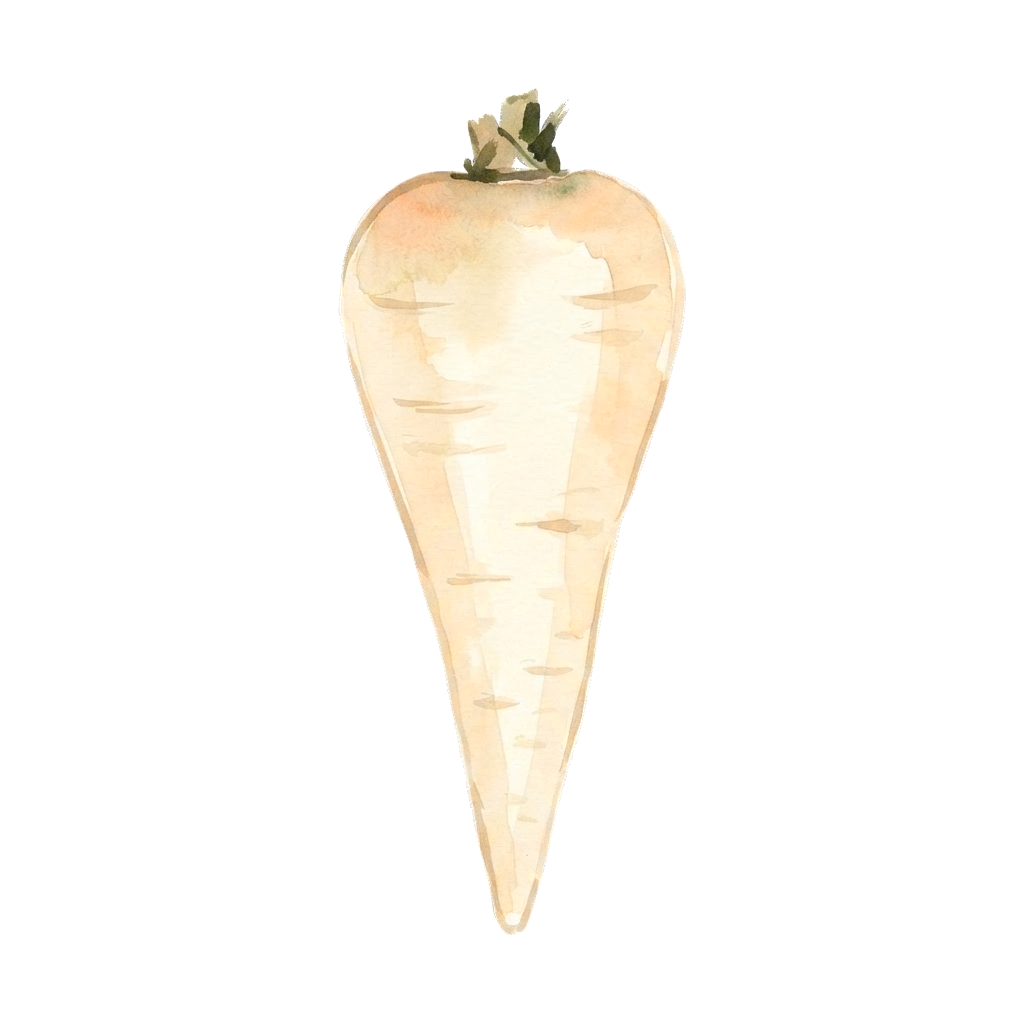
Vegetable · Root crop
Parsnips
Pastinaca sativaA sweet, nutty root that actually improves in flavor after a hard frost converts its starches to sugar. Germination is famously slow and stubborn, testing the patience of even experienced gardeners. The one rule: use fresh seed each year, since parsnip seed loses viability fast.
Sow depth
½ in
Spacing
4 in · rows 12 in
Sun
Full sun
Germination
18–28 days
Time to harvest
100–130 days
Difficulty
Moderate
When to sow parsnips
- Sow from about 3 weeks before your last expected frost until about 3 weeks after your last expected frost.
Direct sow only — parsnips form a long taproot that hates disturbance.Use this year's seed packet; old seed rarely germinates reliably.Sow a few extra seeds per station in case some fail to sprout.
Be patient — mark rows well, since germination can take a month.Keep the seedbed consistently moist until seedlings are established.Thin seedlings to their final spacing to grow long, straight roots.
Wait for frost — cold converts starches to sugars for better flavor.Loosen soil deeply with a fork before easing roots free.Leave roots in the ground and lift them through winter as needed.