Vegetable · Perennial vegetable
Rhubarb
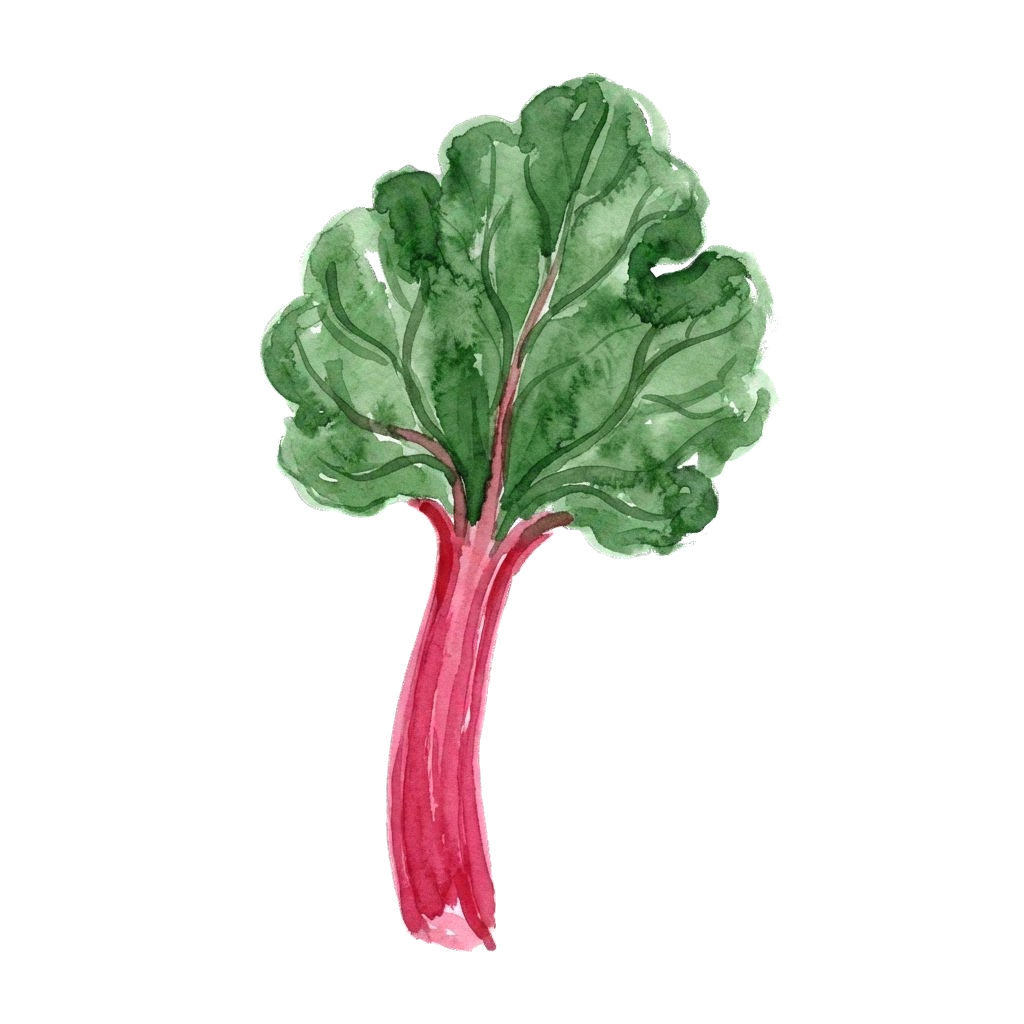
Rheum rhabarbarumA long-lived perennial whose tart, ruby stalks return reliably year after year with almost no fuss once established. Patience in the first year or two pays off in decades of spring harvests. The one rule: never eat the leaves, which contain toxic levels of oxalic acid.
Sow depth
2 in (crown just below the surface)
Spacing
3 ft apart · rows 3 ft
Sun
Full sun
Germination
14–28 days to shoots
Time to harvest
365–545 days
Difficulty
Easy
When to sow rhubarb
- Sow from around the first expected autumn frost until about 6 weeks after the first expected autumn frost.
Plant dormant crowns — set buds just at or slightly below soil level.Choose a permanent, sunny bed; rhubarb will occupy it for years.Enrich the planting hole generously with well-rotted compost or manure.
Feed yearly — top-dress with compost each spring for strong growth.Remove flowering stalks promptly to keep energy going into leaf growth.Water during dry spells, especially in the plant's first couple of seasons.
Wait a full year — resist picking at all in the first growing season.Pull stalks from the base with a twist rather than cutting them.Stop harvesting by midsummer to let the plant recover for next year.
Companion plants
Rhubarb's broad leaves shade the soil and help suppress weeds around nearby brassicas.
Watch out for
Crown rot — Waterlogged soil rots the crown, especially over winter. Plant in free-draining soil or a raised bed to keep crowns dry.