Vegetable · Root crop
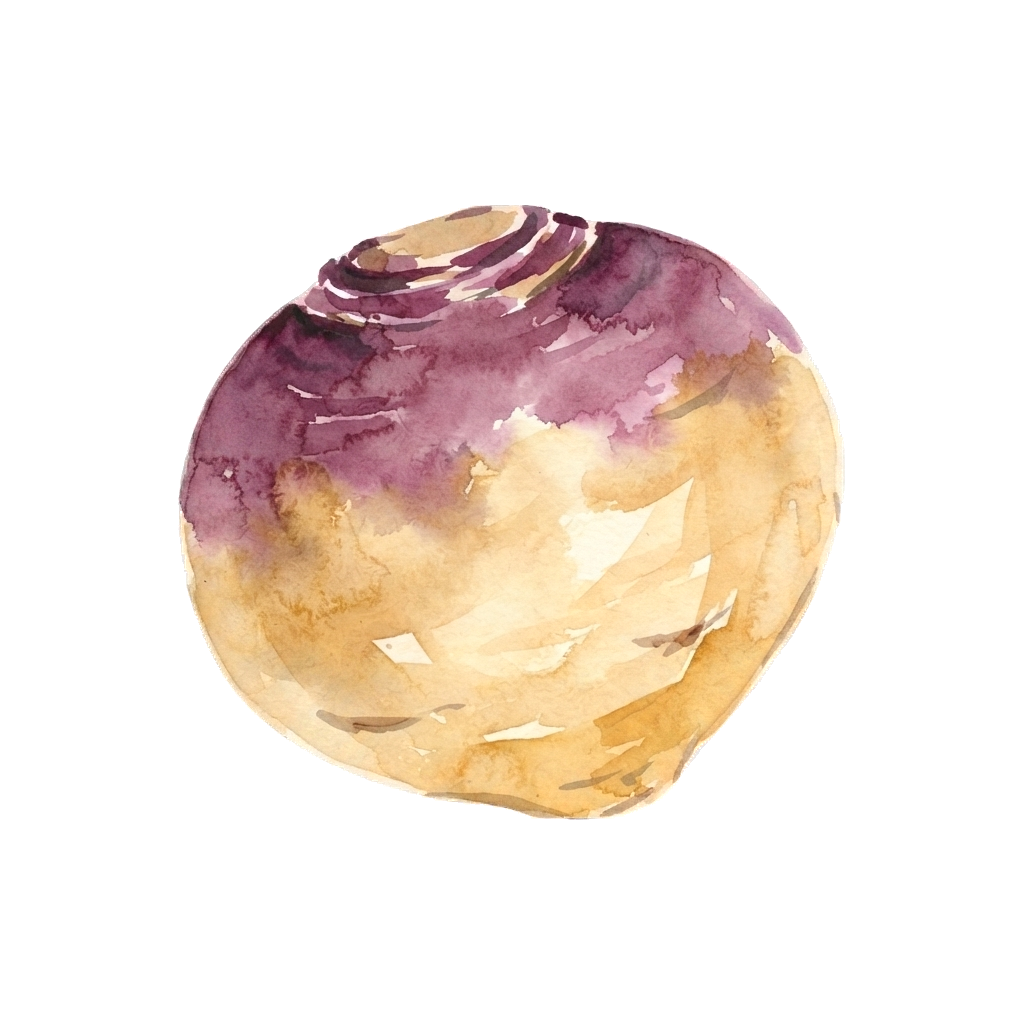
Rutabaga
Brassica napusA hardy, sweet-fleshed root related to turnips, best grown as a slow-maturing crop that finishes in the cool of autumn. A touch of frost concentrates its sugars and mellows any sharpness. The one rule: sow it with enough lead time to bulk up before hard frost arrives.
Sow depth
½ in
Spacing
8 in · rows 16 in
Sun
Full sun
Germination
7–14 days
Time to harvest
80–100 days
Difficulty
Easy
When to sow rutabaga
- Sow from about 16 weeks before the first expected autumn frost until about 13 weeks before the first expected autumn frost.
Direct sow only — rutabaga forms a taproot that dislikes transplanting.Sow into a well-prepared bed a few months before the first hard frost.Thin seedlings early to give roots plenty of room to swell.
Water evenly — inconsistent moisture leads to woody, split roots.Weed regularly while plants are small and slow to cover the ground.Mulch to keep the root zone cool through any remaining warm spells.
Let frost do its work — flavor sweetens noticeably after a cold snap.Lift roots with a fork, easing them free rather than pulling by the tops.Trim foliage and store roots somewhere cool, dark, and humid.
Companion plants
Peas grown earlier in the same bed leave behind nitrogen that benefits the heavier-feeding rutabaga.
Watch out for
Cabbage root fly — Larvae attack roots near the soil surface in warmer months. Fit a collar around each stem at planting to block egg-laying.