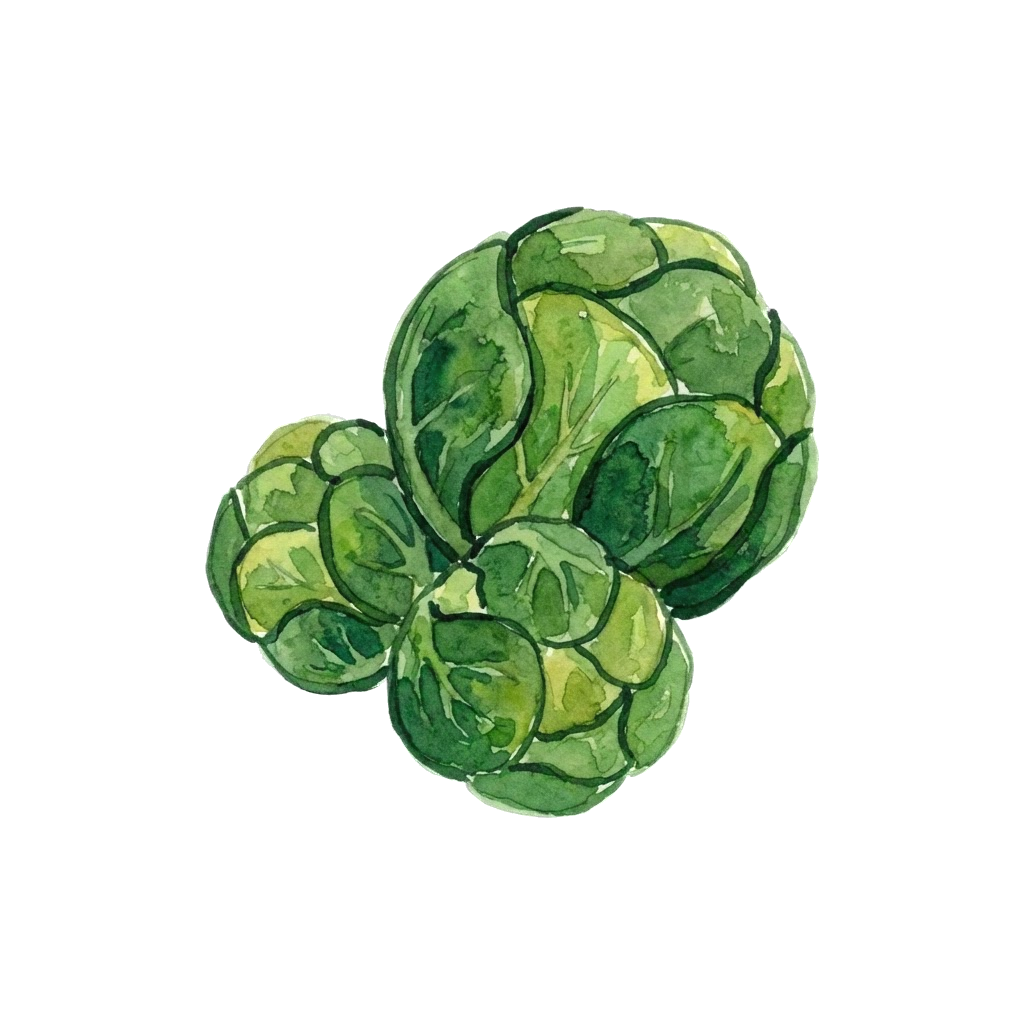
Vegetable · Brassica
Brussels Sprouts
Brassica oleracea var. gemmiferaA slow, patient brassica that needs a long cool season to swell tight little sprouts up its tall stem. A touch of frost late in the season only improves their flavor. The one rule: firm the soil well at planting — loose ground grows loose, blown sprouts.
Sow depth
N/A — transplant seedlings
Spacing
24 in apart · rows 2.5 ft
Sun
Full sun
Germination
N/A
Time to harvest
90–110 days
Difficulty
Moderate
When to sow brussels sprouts
- Sow from about 16 weeks before the first expected autumn frost until about 13 weeks before the first expected autumn frost.
Transplant firmly — press soil in hard around the stem to prevent wobbling.Choose a site sheltered from strong wind; tall stems catch the breeze.Stake exposed plants at transplanting so roots are not rocked loose.
Pinch the growing tip to push sprouts to size up as the season cools.Keep soil consistently moist; dry spells make sprouts loose and puffy.Strip yellowing lower leaves as sprouts below them mature.
Pick from the bottom up once sprouts are firm and walnut-sized.Twist sprouts off cleanly rather than tugging the stem.Leave the rest on the stalk — a frost sweetens the flavor further.
Companion plants
Aromatic herbs like thyme and sage planted nearby help mask the scent brassica pests key in on.
Watch out for
Aphids — Colonize the undersides of sprouts and leaves in mild weather. Rinse off with a strong hose jet or invite ladybirds in.Loose sprouts — Caused by loose planting or uneven watering. Firm the stem in well and water on a steady schedule.