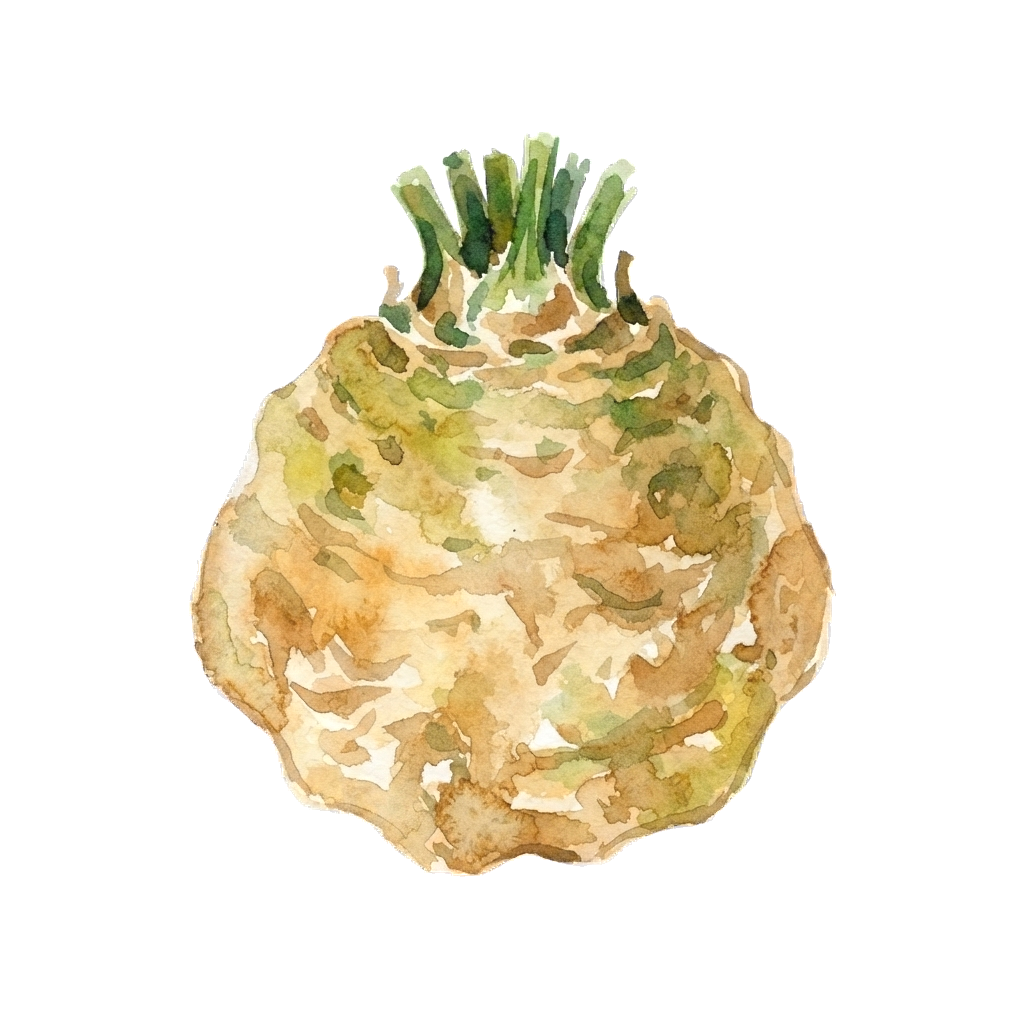
Vegetable · Root crop
Celeriac
Apium graveolens var. rapaceumA knobbly root prized for its intense celery flavor, grown from a seedling that needs months of steady, cool growth to bulk up underground. It demands one of the longest lead times of any vegetable, so timing the indoor sowing matters more than almost anything else. The one rule: don’t rush young seedlings outdoors into cold weather, or they’ll bolt before the root ever forms.
Sow depth
¼ in (barely covered)
Spacing
12 in · rows 16 in
Sun
Full sun or light shade
Germination
14–21 days
Time to harvest
180–210 days
Difficulty
Challenging
When to sow celeriac
- Sow from about 12 weeks before your last expected frost until about 10 weeks before your last expected frost.
Start indoors early — sow 10–12 weeks before the last frost date.Barely cover the seed; celeriac needs light as well as warmth to germinate evenly.Transplant out only once nights are reliably mild, to avoid triggering bolting.
Keep soil constantly moist — dry spells stunt the swelling root for good.Feed regularly through summer; celeriac is a hungry, slow-growing crop.Strip a few outer leaves and side shoots in late summer to expose the crown.
Lift roots once they reach tennis-ball size, from autumn onward.Twist off the leaves rather than cutting, to avoid bleeding the crown.Leave some roots in the ground over winter — a frost only sweetens the flavor.
Companion plants
Leeks share celeriac’s taste for moist, fertile soil and are said to help keep aphids and celery flies at bay.
Watch out for
Celery leaf miner — Tunnels pale blotches into leaves through the season. Remove affected leaves promptly and cover young plants with mesh.Slugs — Shelter around damp seedlings and can strip them overnight. Keep the bed clear of debris and hand-pick at dusk.