Vegetable · Brassica
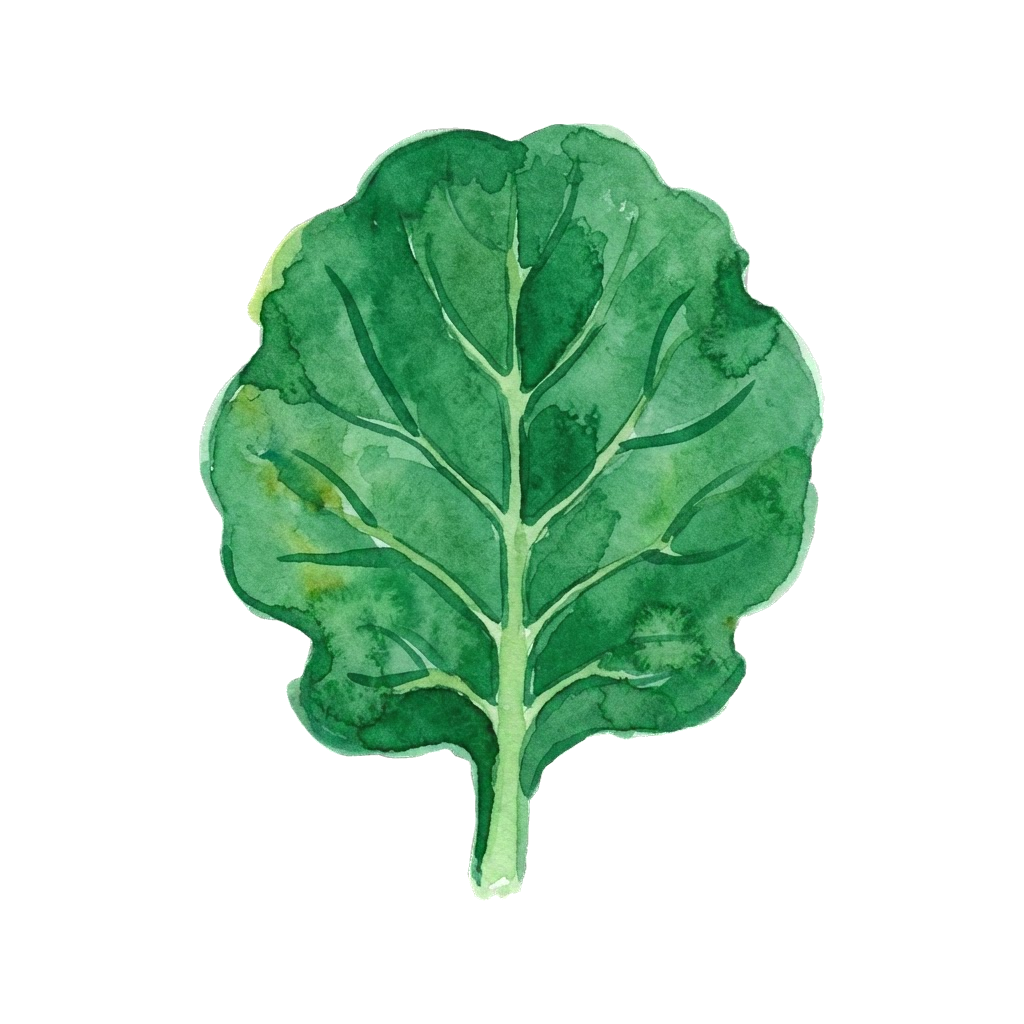
Collards
Brassica oleracea var. viridisA sturdy, big-leafed brassica that shrugs off both heat and cold better than almost any other green in the family. Flavor only improves once frost has touched the leaves. The one rule: keep picking outer leaves and the plant keeps producing for months.
Sow depth
½ in
Spacing
18 in · rows 24 in
Sun
Full sun
Germination
5–10 days
Time to harvest
60–80 days
Difficulty
Easy
When to sow collards
- Sow from about 3 weeks before your last expected frost until about 1 week before your last expected frost.
- Sow from about 13 weeks before the first expected autumn frost until about 10 weeks before the first expected autumn frost.
Direct sow into fertile, well-drained soil, thinning as plants grow.Space generously — collards form large, spreading rosettes.Sow a second round later for a frost-sweetened autumn harvest.
Feed well — collards are heavy feeders that reward rich soil.Water consistently to keep leaves tender rather than tough.Mulch to suppress weeds around the wide-spreading rosette.
Pick outer leaves first, leaving the center to keep growing.Harvest continually through the season for the most tender leaves.Leave plants through a frost or two — the cold sweetens the flavor.
Companion plants
Dill and onions planted close by help confuse egg-laying cabbage moths hunting collard leaves.
Watch out for
Cabbage worms — Chew large ragged holes through the growing season. Cover with insect mesh or hand-pick regularly.Aphids — Cluster on the undersides of leaves in warm spells. Hose off with a strong water jet or encourage ladybirds.