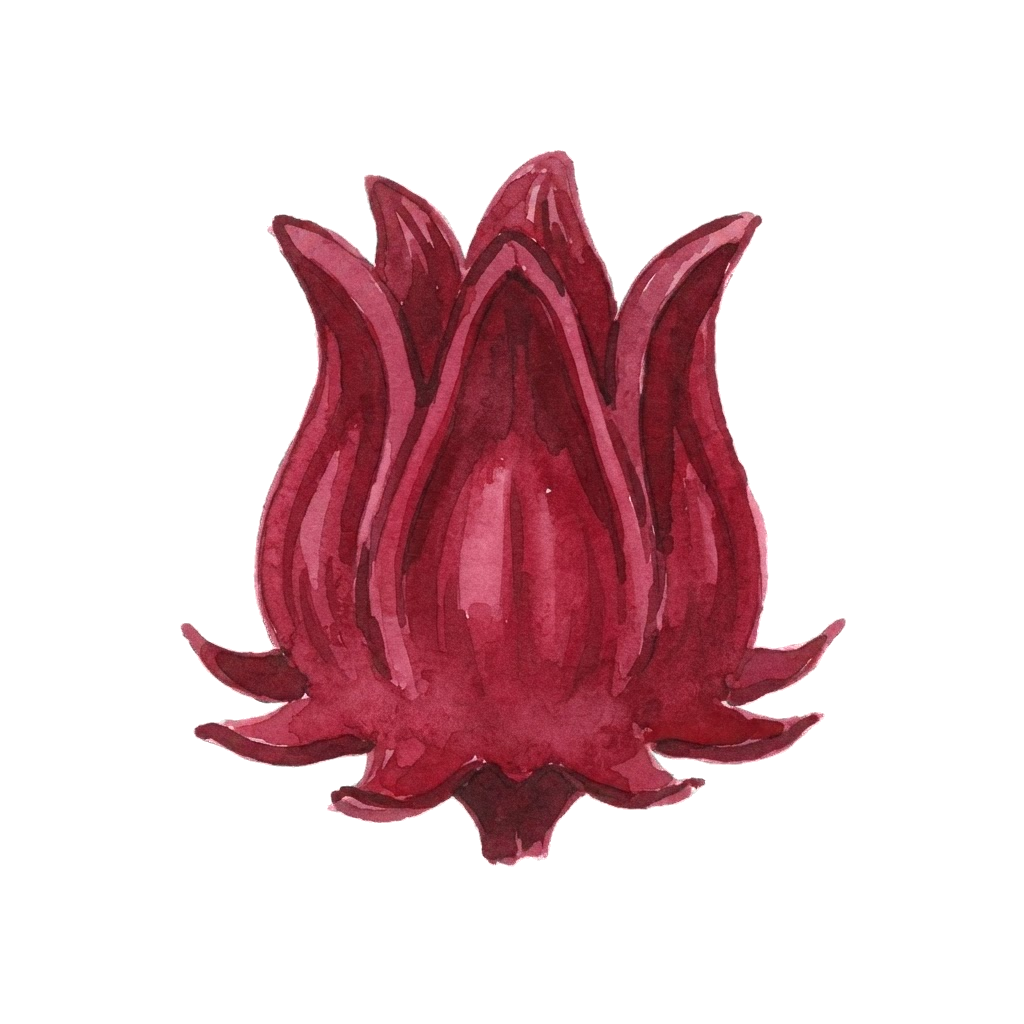
Vegetable · Calyx crop
Roselle (Hibiscus)
Hibiscus sabdariffaA tall, dramatic tropical hibiscus grown not for its brief yellow flowers but for the fleshy red calyces left behind once they fade. It needs a genuinely long, hot growing season, and in most temperate gardens won’t set calyces until day length starts shortening in early autumn. The one rule: give it the whole season to get hot — a short or cool summer leaves little to harvest.
Sow depth
½ in
Spacing
3–4 ft apart
Sun
Full sun
Germination
10–21 days
Time to harvest
90–120 days
Difficulty
Moderate
When to sow roselle (hibiscus)
- Sow from about 2 weeks after your last expected frost until about 19 weeks before the first expected autumn frost.
Soak seed overnight to soften the hard coat, then start indoors 6–8 weeks before the last frost.Transplant out only once nights are reliably warm and frost risk has fully passed.Give each plant 3 ft or more of open ground — it grows into a tall, bushy shrub.
Feed and water generously — a strong, unchecked summer of growth is what sets a heavy calyx crop.Pinch the growing tip in midsummer to encourage a bushier, more productive plant.Expect little from it until days shorten in early autumn — flowering is triggered by daylength, not age.
Cut calyces while plump and tender, 7–10 days after the flower fades and before they toughen.Twist or snip calyces off close to the stem, leaving the seed pod behind if saving seed.Keep picking regularly — a frost blackens and kills the whole plant overnight.
Companion plants
Nasturtiums and marigolds planted nearby help draw aphids away from the tender new growth roselle relies on for its next flush of calyces.
Watch out for
Aphids — Cluster on soft new growth and flower buds in warm weather. Spray off with water or use insecticidal soap before colonies build up.Root-knot nematodes — Stunt growth in warm, sandy soils. Rotate beds and interplant with marigolds to suppress populations.