Vegetable · Leafy green
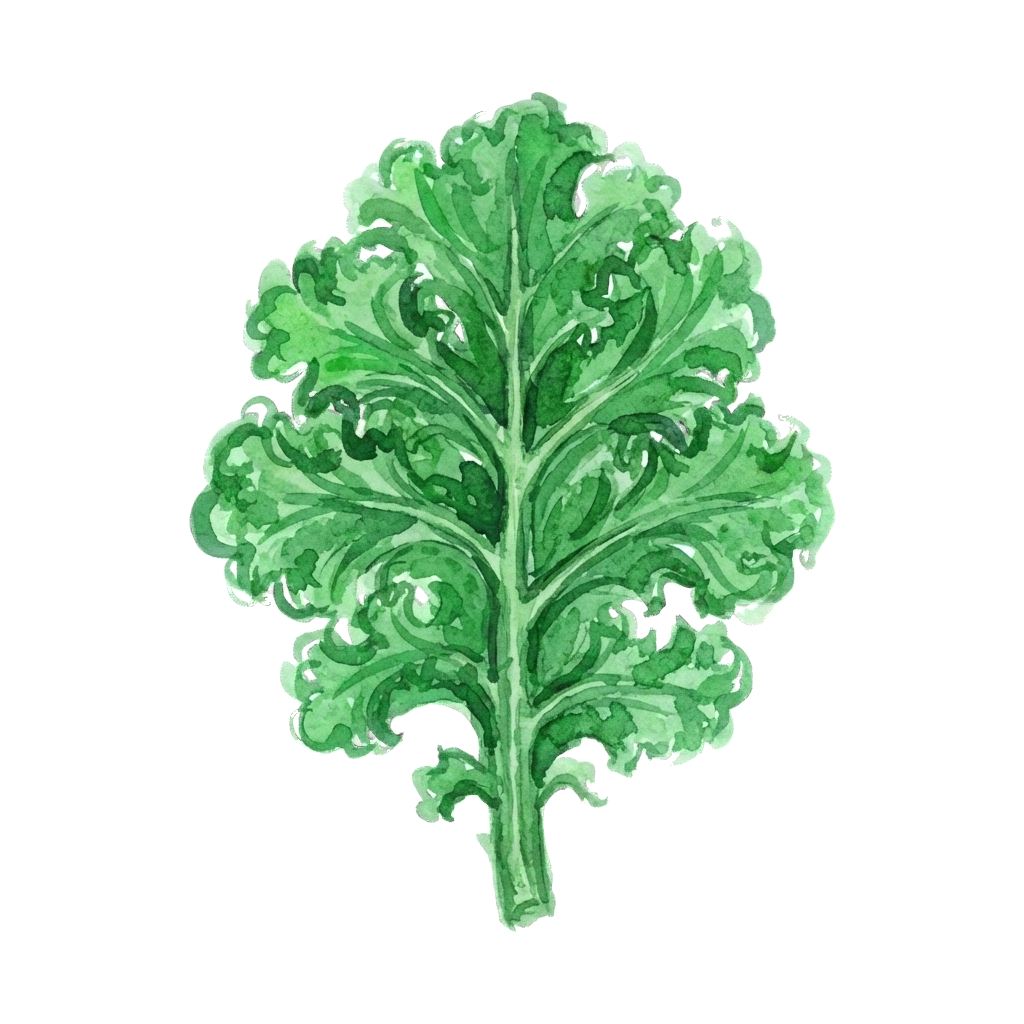
Kale
Brassica oleraceaA tough, nutrient-dense brassica that shrugs off cold and actually tastes better after a frost has sweetened its leaves. Cut-and-come-again harvesting keeps a single planting productive for months. The one rule: pick outer leaves regularly to keep the plant producing new growth.
Sow depth
½ in
Spacing
12 in · rows 18 in
Sun
Full sun
Germination
5–10 days
Time to harvest
55–65 days
Difficulty
Easy
When to sow kale
- Sow from about 5 weeks before your last expected frost until about 2 weeks before your last expected frost.
- Sow from about 10 weeks before the first expected autumn frost until about 7 weeks before the first expected autumn frost.
Direct sow or transplant — kale tolerates both methods equally well.Sow thinly in drills and thin seedlings to their final spacing.Cool, moist soil gives the quickest, most even germination.
Mulch well — it conserves moisture and suppresses competing weeds.Water consistently; drought stress toughens leaves and invites pests.Net young plants if pigeons or rabbits are a problem locally.
Pick from the bottom up — take outer leaves, leaving the crown intact.Harvest little and often for the most tender, mildest-flavored leaves.Leave plants in place through frosts; cold converts starch to sugar.
Companion plants
Nasturtiums lure aphids away from kale as a sacrificial trap crop.
Watch out for
Cabbage white caterpillars — Butterflies lay eggs on leaf undersides through the growing season. Cover plants with insect mesh or check and pick off eggs weekly.